


If you’ve been growing vegetables for a while, there’s a good chance you’ve encountered plants with unusual discoloration or growth patterns. These abnormalities are referred to as Chimera - a genetic disorder that can easily be mistaken for viral symptoms, such as those caused by the Alfalfa Virus.
What is Chimera?
Chimera is not a disease or pathological symptom but rather a genetic irregularity. It occurs due to mutations in the plant's meristem, the region where growth is most active.
Key characteristics:
- Appearance: Chimera affects leaves unevenly, resulting in patches of green, yellow, or white. These areas lack sufficient chlorophyll or produce none at all, leading to suboptimal photosynthesis and growth.
- Impact on growth: In mild cases, plants may exhibit stunted growth patterns. In severe cases, especially in seedlings, Chimera can result in death.
- Non-contagious: Unlike diseases caused by pathogens, Chimera is not spread by vectors (such as insects) or through plant-to-plant contact.
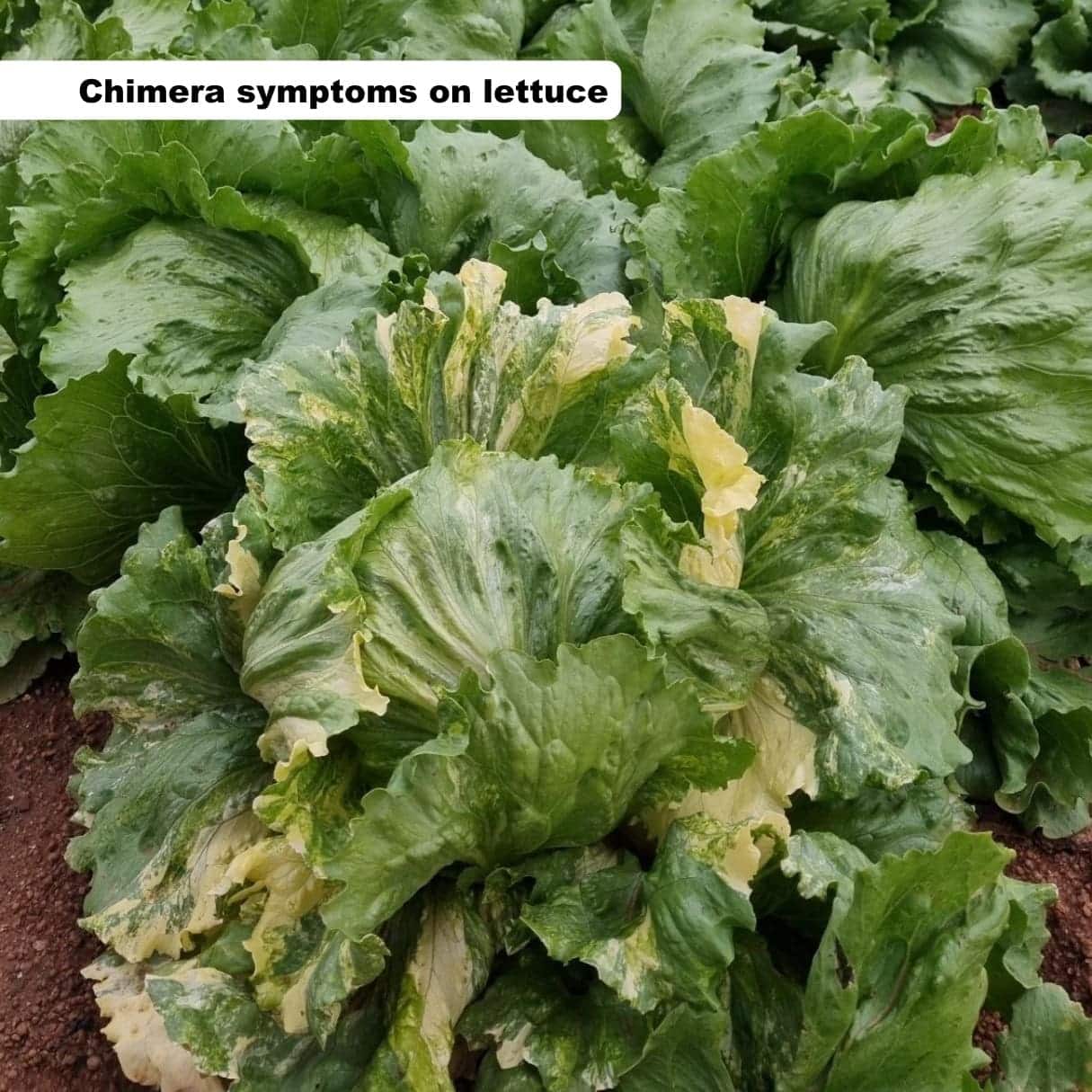

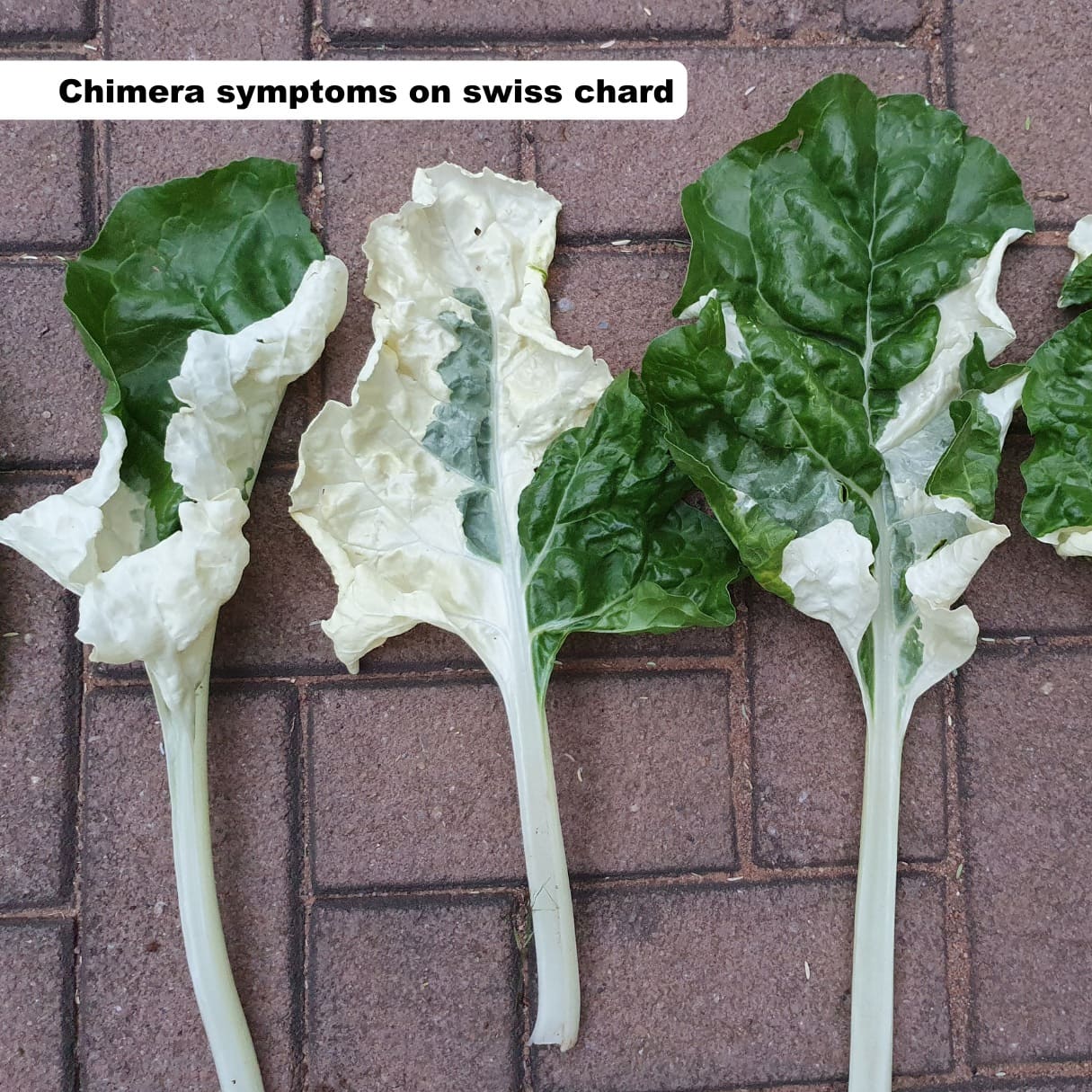
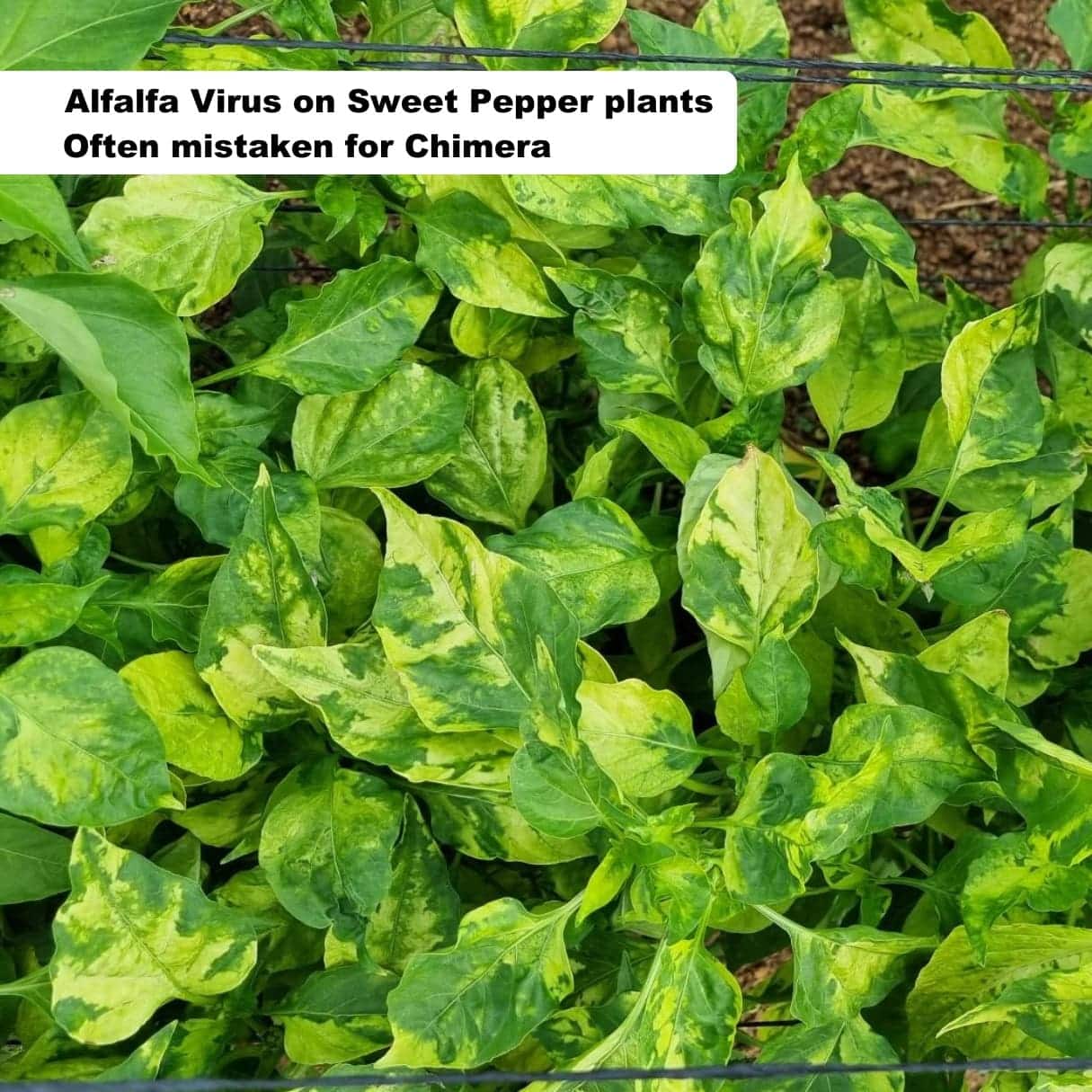
Which crops are affected?
Chimera appears more frequently in leafy vegetables like:
- Cabbage
- Lettuce
- Swiss chard
- Spinach
It is less common in fruiting vegetables such as tomatoes and peppers.
Important takeaway:
Chimera may resemble viral infections, but understanding its genetic nature is crucial to avoid misdiagnosis. Knowing the difference between crop diseases and disorders helps in implementing the correct management strategies, ensuring your plants thrive despite these challenges.